Sebanyak 1234 item atau buku ditemukan

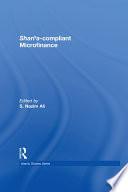
Shari'a Compliant Microfinance

In the recent past, Islamic finance has made an impressive case on the banking scene by becoming an alternative to the popular conventional financial systems, spurring a lively academic debate on how the Islamic finance industry can expand its services to cover the poor. Several propositions have been aired which suggest that the Islamic finance industry should consider developing an efficient Shari‘a compliant microfinance model. This book brings together original contributions from leading authorities on the subject of Shari‘a Compliant Microfinance (Islamic Microfinance) to propose innovative solutions and models by carefully studying experiments conducted in various countries. Where critiques of the current microfinance concepts, methods, regulatory measures and practices have often revolved around its practice of charging very high interest, this book discusses the several models that draw on both theory and case studies to provide a sustainable Shari‘a compliant alternative. Arguing that while Islamic finance might have made a remarkable contribution in the financial markets, there remains a big question with regards to its social relevance, the book provides new perspectives and innovative solutions to issues facing the Islamic microfinance industry. A comprehensive reference book for anyone wanting to learn more about Shari‘a Compliant Microfinance, this book will also be of use to students and scholars of microfinance, Islamic finance, and to anyone interested in learning about ethical and socially responsible businesses.

This book brings together original contributions from leading authorities on the subject of Shari‘a Compliant Microfinance (Islamic Microfinance) to propose innovative solutions and models by carefully studying experiments conducted in ...

Asset Liability Management

Comparative Study Between the Conventional and Islamic Banks in Malaysia

This research evaluates the asset liability management of both conventional banks and Islamic banks in Malaysia, pre and post global financial crisis 2007/2008. This research is motivated by the fact that conventional banking system and Islamic banking system are operating on different frameworks and fundamentals. The purpose of this research study is to examine whether there are any significant differences between the Islamic banks in Malaysia and its conventional counterparts in terms of asset liability management. It is investigated from three aspects, which are interest (profit) rate risk management, credit risk management and liquidity risk management, before and after the global crisis. This research applies a descriptive method of data analysis as well as parametric and non-parametric tests, i.e. independent samples t-test and Mann Whitney U-test. The findings of this research suggest that there does not seem to be any significant differences between the conventional banks and the Islamic banks in terms of interest (profit) rate risk management (Net Interest Margin, Net Interest Income), credit risk management (Equity to Total Assets, Equity to Net Loans) and liquidity risk management (Liquidity Ratio, Net Loans to Total Assets Ratio). Limitation of this research is that the research focused on Malaysian data and to what extend Islamic banking systems is shariah compliant or not is not examined. The outcome of this research may highlight the risk that needs more significant attention in order to reduce the likelihood of exposures to the Islamic banks. Besides that, it may also highlight the need to implement new policy of asset liability composition in Islamic banks by the regulators. Further research on the area of Islamic banking system's asset liability management from the qualitative aspect is highly recommended, as there is limited literature on this area.

This research evaluates the asset liability management of both conventional banks and Islamic banks in Malaysia, pre and post global financial crisis 2007/2008.

Auditing (Pemeriksaan Akuntansi I)

Standar auditing merupakan pedoman umum untuk membantu auditor dalam memenuhi tanggung jawab profesionalnya sehubungan dengan audit yang dilakukan atas laporan keuangan historis kliennya. Buku Auditing (Pemeriksaan Akuntansi I) ini membahas tentang standar audit, laporan audit, materialitas, tanggung jawab manajemen, tanggung jawab auditor, asersi manajemen, tujuan audit atas transaksi, saldo, dokumentasi audit, perencanaan audit, prosedur analitis, dan audit atas pengendalian internal. Serta dapat dijadikan referensi bagi para mahasiswa S1 maupun S2 akuntansi, khususnya yang sedang mengambil mata kuliah Auditing.

Buku Auditing (Pemeriksaan Akuntansi I) ini membahas tentang standar audit, laporan audit, materialitas, tanggung jawab manajemen, tanggung jawab auditor, asersi manajemen, tujuan audit atas transaksi, saldo, dokumentasi audit, perencanaan ...

Perekonomian Indonesia

masalah, potensi, dan alternatif solusi

On economic conditions and policy in Indonesia.

On economic conditions and policy in Indonesia.