Sebanyak 1635 item atau buku ditemukan

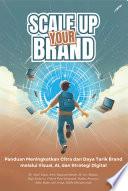
Scale Up Your Brand

Panduan Meningkatkan Citra dan Daya Tarik Brand melalui Visual, AI, dan Strategi Digital

Di tengah derasnya arus digital dan konten yang saling berebut perhatian, bagaimana sebuah brand bisa tampil, bertahan, dan dipercaya? Buku ini hadir sebagai panduan praktis sekaligus reflektif bagi siapa pun yang ingin membangun identitas digital yang kuat, bermakna, dan berdampak. Ditulis oleh delapan penulis muda dengan latar belakang kreatif dan akademik, Scale Up Your Brand mengupas tuntas strategi konten visual, kekuatan narasi (copywriting), pemanfaatan teknologi (AI), serta nilai-nilai etis dalam membentuk citra brand yang autentik. Dengan pendekatan yang aplikatif dan penuh contoh nyata—mulai dari UMKM, pesantren, komunitas kreatif, hingga praktik pemerintah daerah dan pusat—buku ini menawarkan cara baru dalam memandang branding: bukan hanya sebagai alat promosi, tetapi juga sebagai sarana dakwah, pemberdayaan, dan kontribusi sosial. Cocok untuk pelaku usaha, pegiat dakwah digital, santri kreatif, mahasiswa, dan siapa pun yang ingin scale up—bukan hanya dalam angka, tetapi juga dalam makna.

Ditulis oleh delapan penulis muda dengan latar belakang kreatif dan akademik, Scale Up Your Brand mengupas tuntas strategi konten visual, kekuatan narasi (copywriting), pemanfaatan teknologi (AI), serta nilai-nilai etis dalam membentuk ...

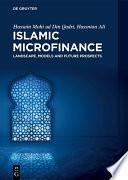
Islamic Microfinance

Landscape, Models and Future Prospects

Islamic microfinance is one of the most important sectors of Islamic social finance, which plays a very important role in curbing poverty and improving the standard of living, per capita income, employment level as well as achieving Maqasid al-Shariah, profitability and sustainability. This role of Islamic microfinance has become more crucial in the pandemic period. It has been clearly witnessed in developing countries such as Pakistan and Bangladesh, how Islamic microfinance institutions helped deprived and affected communities during the pandemic. Another important development during the pandemic was the introduction of blended models of Islamic microfinance such as waqf-based Islamic microfinance, a zakat-based model and the combination of Islamic commercial and social finance. Islamic microfinance institutions also aim to harness the power of digitalization and fintech, but they need to consider the necessary success factors to realize and gain the real benefits of technology. There are some major challenges related to regulations, management issues, lack of skilled human resources, a wide digital divide and low level of financial literacy in developing countries. These challenges need to be addressed to ensure stability, steady growth and sustainability in the sector. This book is a compendium on Islamic microfinance, including case studies from seven jurisdictions and prospects for the sector. The book will be a major contribution to the literature of Islamic economics and finance and a guide of equal importance for students, academics, institutions, regulators, fintechs, policy makers and the general public.

These challenges need to be addressed to ensure stability, steady growth and sustainability in the sector. This book is a compendium on Islamic microfinance, including case studies from seven jurisdictions and prospects for the sector.

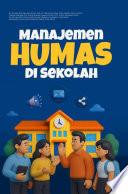
Manajemen Humas di Sekolah

Manajemen humas di sekolah menjadi instrumen strategis dalam membangun citra positif, memperkuat partisipasi masyarakat, serta mewujudkan transparansi dan akuntabilitas lembaga pendidikan. Melalui pendekatan yang sistematis dan aplikatif, buku ini membahas konsep dasar humas, fungsi dan prinsip komunikatifnya, strategi pengelolaan hubungan publik, hingga implementasi program humas yang efektif dalam meningkatkan kepercayaan dan dukungan dari seluruh pemangku kepentingan pendidikan. Buku persembahan penerbit PenaCendekia #PenaCendekiaPustaka

Manajemen humas di sekolah menjadi instrumen strategis dalam membangun citra positif, memperkuat partisipasi masyarakat, serta mewujudkan transparansi dan akuntabilitas lembaga pendidikan.

Computational Design Thinking

Computation Design Thinking

The current transition from Computer Aided Design (CAD) to Computational Design in architecture represents a profound shift in design thinking and methods. Representation is being replaced by simulation, and the crafting of objects is moving towards the generation of integrated systems through designer-authored computational processes. While there is a particular history of such an approach in architecture, its relative newness requires the continued progression of novel modes of design thinking for the architect of the 21st century. This AD Reader establishes a foundation for such thinking. It includes multifaceted reflections and speculations on the profound influence of computational paradigms on architecture. It presents relevant principles from the domains of mathematics and computer science, developmental and evolutionary biology, system science and philosophy, establishing a discourse for computational design thinking in architecture. Rather than a merely technical approach, the book will discuss essential intellectual concepts that are fundamental not only for a discourse on computational design but also for its practice. This anthology provides a unique collection of seminal texts by authors, who have either provided a significant starting point through which a computational approach to design has been pursued or have played a considerable role in shaping the field. An important aspect of this book is the manner in which adjacent fields and historical texts are connected. Both the source of original inspiration and scientific thought are presented alongside contemporary writings on the continually evolving computational design discourse. Emerging from the field of science, principally the subjects of morphogenesis, evolution and mathematics, selected texts provide a historical basis for a reconfigured mindset of processes that generate, arrange and describe form. Juxtaposed against more contemporary statements regarding the influence of computation on design thinking, the book offers advancements of fundamental texts to the particular purpose of establishing novel thought processes for architecture, theoretically and practically. The first reader to provide an effective framework for computational thinking in design. Includes classic texts by Johan W. von Goethe, D’Arcy Thompson, Ernst Mayr, Ludwig von Bertalanffy, Gordan Pask, Christopher Alexander, John H. Holland, Nicholas Negroponte, William Mitchell, Peter J. Bentley & David W. Corne, Sanford Kwinter, John Frazer, Kostis Terzidis, Michael Weinstock and Achim Menges Features new writing by: Mark Burry, Jane Burry, Manuel DeLanda and Peter Trummer.

An important aspect of this book is the manner in which adjacent fields and historical texts are connected.


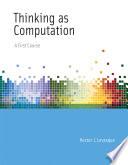
Thinking as Computation

A First Course

Students explore the idea that thinking is a form of computation by learning to write simple computer programs for tasks that require thought. This book guides students through an exploration of the idea that thinking might be understood as a form of computation. Students make the connection between thinking and computing by learning to write computer programs for a variety of tasks that require thought, including solving puzzles, understanding natural language, recognizing objects in visual scenes, planning courses of action, and playing strategic games. The material is presented with minimal technicalities and is accessible to undergraduate students with no specialized knowledge or technical background beyond high school mathematics. Students use Prolog (without having to learn algorithms: “Prolog without tears!”), learning to express what they need as a Prolog program and letting Prolog search for answers. After an introduction to the basic concepts, Thinking as Computation offers three chapters on Prolog, covering back-chaining, programs and queries, and how to write the sorts of Prolog programs used in the book. The book follows this with case studies of tasks that appear to require thought, then looks beyond Prolog to consider learning, explaining, and propositional reasoning. Most of the chapters conclude with short bibliographic notes and exercises. The book is based on a popular course at the University of Toronto and can be used in a variety of classroom contexts, by students ranging from first-year liberal arts undergraduates to more technically advanced computer science students.

This book guides students through an exploration of the idea that thinking might be understood as a form of computation.