Sebanyak 24 item atau buku ditemukan

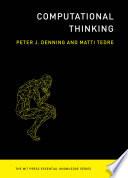
Computational Thinking

This pocket-sized introduction to computational thinking and problem-solving traces its genealogy centuries before the digital computer. A few decades into the digital era, scientists discovered that thinking in terms of computation made possible an entirely new way of organizing scientific investigation. Eventually, every field had a computational branch: computational physics, computational biology, computational sociology. More recently, “computational thinking” has become part of the K–12 curriculum. But what is computational thinking? This volume in the MIT Press Essential Knowledge series offers an accessible overview—tracing a genealogy that begins centuries before digital computers and portraying computational thinking as the pioneers of computing have described it. The authors explain that computational thinking (CT) is not a set of concepts for programming; it is a way of thinking that is honed through practice: the mental skills for designing computations to do jobs for us, and for explaining and interpreting the world as a complex of information processes. Mathematically trained experts (known as “computers”) who performed complex calculations as teams engaged in CT long before electronic computers. In each chapter, the author identify different dimensions of today's highly developed CT: • Computational Methods • Computing Machines • Computing Education • Software Engineering • Computational Science • Design Along the way, they debunk inflated claims for CT and computation while making clear the power of CT in all its complexity and multiplicity.

This volume in the MIT Press Essential Knowledge series offers an accessible overview—tracing a genealogy that begins centuries before digital computers and portraying computational thinking as the pioneers of computing have described it.
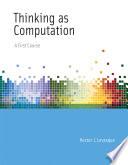
Thinking as Computation

A First Course

Students explore the idea that thinking is a form of computation by learning to write simple computer programs for tasks that require thought. This book guides students through an exploration of the idea that thinking might be understood as a form of computation. Students make the connection between thinking and computing by learning to write computer programs for a variety of tasks that require thought, including solving puzzles, understanding natural language, recognizing objects in visual scenes, planning courses of action, and playing strategic games. The material is presented with minimal technicalities and is accessible to undergraduate students with no specialized knowledge or technical background beyond high school mathematics. Students use Prolog (without having to learn algorithms: “Prolog without tears!”), learning to express what they need as a Prolog program and letting Prolog search for answers. After an introduction to the basic concepts, Thinking as Computation offers three chapters on Prolog, covering back-chaining, programs and queries, and how to write the sorts of Prolog programs used in the book. The book follows this with case studies of tasks that appear to require thought, then looks beyond Prolog to consider learning, explaining, and propositional reasoning. Most of the chapters conclude with short bibliographic notes and exercises. The book is based on a popular course at the University of Toronto and can be used in a variety of classroom contexts, by students ranging from first-year liberal arts undergraduates to more technically advanced computer science students.

This book guides students through an exploration of the idea that thinking might be understood as a form of computation.

Systems, Experts, and Computers

The Systems Approach in Management and Engineering, World War II and After

This groundbreaking book charts the origins and spread of the systems movement. After World War II, a systems approach to solving complex problems and managing complex systems came into vogue among engineers, scientists, and managers, fostered in part by the diffusion of digital computing power. Enthusiasm for the approach peaked during the Johnson administration, when it was applied to everything from military command and control systems to poverty in American cities. Although its failure in the social sphere, coupled with increasing skepticism about the role of technology and "experts" in American society, led to a retrenchment, systems methods are still part of modern managerial practice. This groundbreaking book charts the origins and spread of the systems movement. It describes the major players including RAND, MITRE, Ramo-Wooldrige (later TRW), and the International Institute of Applied Systems Analysis—and examines applications in a wide variety of military, government, civil, and engineering settings. The book is international in scope, describing the spread of systems thinking in France and Sweden. The story it tells helps to explain engineering thought and managerial practice during the last sixty years.

The book is international in scope, describing the spread of systems thinking in France and Sweden. The story it tells helps to explain engineering thought and managerial practice during the last sixty years.

Knowledge Management in Theory and Practice, third edition

A new, thoroughly updated edition of a comprehensive overview of knowledge management (KM), covering theoretical foundations, the KM process, tools, and professions. The ability to manage knowledge has become increasingly important in today's knowledge economy. Knowledge is considered a valuable commodity, embedded in products and in the tacit knowledge of highly mobile individual employees. Knowledge management (KM) represents a deliberate and systematic approach to cultivating and sharing an organization's knowledge base. This textbook and professional reference offers a comprehensive overview of the field. Drawing on ideas, tools, and techniques from such disciplines as sociology, cognitive science, organizational behavior, and information science, it describes KM theory and practice at the individual, community, and organizational levels. Chapters cover such topics as tacit and explicit knowledge, theoretical modeling of KM, the KM cycle from knowledge capture to knowledge use, KM tools, KM assessment, and KM professionals. This third edition has been completely revised and updated to reflect advances in the dynamic and emerging field of KM. The specific changes include extended treatment of tacit knowledge; integration of such newer technologies as social media, visualization, mobile technologies, and crowdsourcing; a new chapter on knowledge continuity, with key criteria for identifying knowledge at risk; material on how to identify, document, validate, share, and implement lessons learned and best practices; the addition of new categories of KM jobs; and a new emphasis on the role of KM in innovation. Supplementary materials for instructors are available online.

This third edition has been completely revised and updated to reflect advances in the dynamic and emerging field of KM. The specific changes include extended treatment of tacit knowledge; integration of such newer technologies as social ...