Sebanyak 329 item atau buku ditemukan

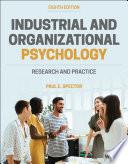
Industrial and Organizational Psychology

Research and Practice

Explore the foundations of, and latest developments in, industrial-organizational psychology from employee and employer perspectives In the newly revised Eighth Edition of Industrial and Organizational Psychology: Research and Practice, distinguished researcher and psychologist Paul E. Spector delivers a robust and up-to-date review of the industrial-organizational field that covers the latest research on contemporary trends and traditional areas of the subject. The author draws on four decades of research and teaching experience, balancing employee and organizational perspectives by covering issues relating to both employee well-being and productivity. The new edition places a special focus on how technology is affecting a variety of issues in industrial-organizational psychology, especially employee selection and training. The growing trend of gamification as it relates to employee assessment, motivation, and training is discussed. Each chapter includes a special feature that links to the author’s weekly blog expanding on the topics explained within the book. The book includes an instructor guide for using the blog in class. The book also offers: Current and balanced discussions of the most pertinent issues in industrial-organizational psychology today A special focus on the use of technology by employers to impact employee selection and training Practical discussions of gamification as a tool in employee assessment, motivation, and training Special features in each chapter that link back to the author’s popular, weekly blog on a variety of industrial-organizational issues Perfect for undergraduate and graduate students studying industrial-organizational psychology, Industrial and Organizational Psychology: Research and Practice will also earn a place in the libraries of business students with an interest in organizational psychology seeking an accessible overview of the industrial-organizational field.

Each chapter includes a special feature that links to the author’s weekly blog expanding on the topics explained within the book. The book includes an instructor guide for using the blog in class.


Computational Design Thinking

Computation Design Thinking

The current transition from Computer Aided Design (CAD) to Computational Design in architecture represents a profound shift in design thinking and methods. Representation is being replaced by simulation, and the crafting of objects is moving towards the generation of integrated systems through designer-authored computational processes. While there is a particular history of such an approach in architecture, its relative newness requires the continued progression of novel modes of design thinking for the architect of the 21st century. This AD Reader establishes a foundation for such thinking. It includes multifaceted reflections and speculations on the profound influence of computational paradigms on architecture. It presents relevant principles from the domains of mathematics and computer science, developmental and evolutionary biology, system science and philosophy, establishing a discourse for computational design thinking in architecture. Rather than a merely technical approach, the book will discuss essential intellectual concepts that are fundamental not only for a discourse on computational design but also for its practice. This anthology provides a unique collection of seminal texts by authors, who have either provided a significant starting point through which a computational approach to design has been pursued or have played a considerable role in shaping the field. An important aspect of this book is the manner in which adjacent fields and historical texts are connected. Both the source of original inspiration and scientific thought are presented alongside contemporary writings on the continually evolving computational design discourse. Emerging from the field of science, principally the subjects of morphogenesis, evolution and mathematics, selected texts provide a historical basis for a reconfigured mindset of processes that generate, arrange and describe form. Juxtaposed against more contemporary statements regarding the influence of computation on design thinking, the book offers advancements of fundamental texts to the particular purpose of establishing novel thought processes for architecture, theoretically and practically. The first reader to provide an effective framework for computational thinking in design. Includes classic texts by Johan W. von Goethe, D’Arcy Thompson, Ernst Mayr, Ludwig von Bertalanffy, Gordan Pask, Christopher Alexander, John H. Holland, Nicholas Negroponte, William Mitchell, Peter J. Bentley & David W. Corne, Sanford Kwinter, John Frazer, Kostis Terzidis, Michael Weinstock and Achim Menges Features new writing by: Mark Burry, Jane Burry, Manuel DeLanda and Peter Trummer.

An important aspect of this book is the manner in which adjacent fields and historical texts are connected.

Key Performance Indicators (KPI)

Developing, Implementing, and Using Winning KPIs

An in-depth look at how to create and use key performance indicators (KPIs), from the King of KPIs – now updated and expanded! By exploring measures that have transformed businesses, David Parmenter has developed a methodology that is breathtaking in its simplicity and yet profound in its impact. Now in an updated and expanded Second Edition, Key Performance Indicators is a proactive guide representing a significant shift in the way KPIs are developed and used, with an abundance of implementation tools, including: The four foundation stones that lead the development and use of KPIs A 12-step model for developing and using KPIs with guidelines A KPI resource kit including worksheets, workshop programs, and questionnaires A new and pragmatic approach to finding critical success factors Over 300 performance measures Implementation variations for small to medium enterprises and not-for-profit organizations New implementation short cuts How to brainstorm performance measures Templates for reporting performance measures A resource kit for a consultant who is acting as a coach / facilitator to the in-house project team Now including a discussion of critical success factors, as well as new chapters that focus on implementations issues and 'how to sections' on finding your CSFs and brainstorming the performance measures that report progress within the CSFs, Key Performance Indicators, Second Edition will help you identify and track your organization's KPIs to ensure continued and increased success.

Written by KPI expert David Parmenter, it has been said that this book is the missing link between the balanced scorecard work of Robert Kaplan and David Norton and the reality of implementing performance measurement in an organization.

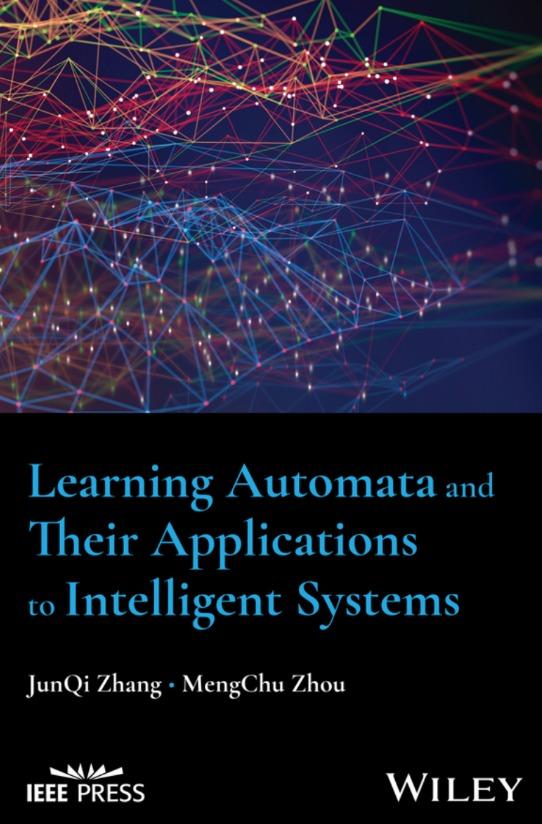
Learning Automata and Their Applications to Intelligent Systems