Sebanyak 43450 item atau buku ditemukan

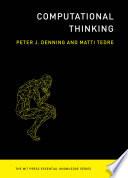
Computational Thinking

This pocket-sized introduction to computational thinking and problem-solving traces its genealogy centuries before the digital computer. A few decades into the digital era, scientists discovered that thinking in terms of computation made possible an entirely new way of organizing scientific investigation. Eventually, every field had a computational branch: computational physics, computational biology, computational sociology. More recently, “computational thinking” has become part of the K–12 curriculum. But what is computational thinking? This volume in the MIT Press Essential Knowledge series offers an accessible overview—tracing a genealogy that begins centuries before digital computers and portraying computational thinking as the pioneers of computing have described it. The authors explain that computational thinking (CT) is not a set of concepts for programming; it is a way of thinking that is honed through practice: the mental skills for designing computations to do jobs for us, and for explaining and interpreting the world as a complex of information processes. Mathematically trained experts (known as “computers”) who performed complex calculations as teams engaged in CT long before electronic computers. In each chapter, the author identify different dimensions of today's highly developed CT: • Computational Methods • Computing Machines • Computing Education • Software Engineering • Computational Science • Design Along the way, they debunk inflated claims for CT and computation while making clear the power of CT in all its complexity and multiplicity.

This volume in the MIT Press Essential Knowledge series offers an accessible overview—tracing a genealogy that begins centuries before digital computers and portraying computational thinking as the pioneers of computing have described it.
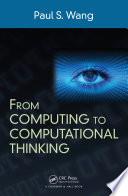
From Computing to Computational Thinking

Computational Thinking (CT) involves fundamental concepts and reasoning, distilled from computer science and other computational sciences, which become powerful general mental tools for solving problems, increasing efficiency, reducing complexity, designing procedures, or interacting with humans and machines. An easy-to-understand guidebook, From Computing to Computational Thinking gives you the tools for understanding and using CT. It does not assume experience or knowledge of programming or of a programming language, but explains concepts and methods for CT with clarity and depth. Successful applications in diverse disciplines have shown the power of CT in problem solving. The book uses puzzles, games, and everyday examples as starting points for discussion and for connecting abstract thinking patterns to real-life situations. It provides an interesting and thought-provoking way to gain general knowledge about modern computing and the concepts and thinking processes underlying modern digital technologies.

The book uses puzzles, games, and everyday examples as starting points for discussion and for connecting abstract thinking patterns to real-life situations.

Computational Thinking: A Perspective on Computer Science

This textbook is intended as a textbook for one-semester, introductory computer science courses aimed at undergraduate students from all disciplines. Self-contained and with no prerequisites, it focuses on elementary knowledge and thinking models. The content has been tested in university classrooms for over six years, and has been used in summer schools to train university and high-school teachers on teaching introductory computer science courses using computational thinking. This book introduces computer science from a computational thinking perspective. In computer science the way of thinking is characterized by three external and eight internal features, including automatic execution, bit-accuracy and abstraction. The book is divided into chapters on logic thinking, algorithmic thinking, systems thinking, and network thinking. It also covers societal impact and responsible computing material – from ICT industry to digital economy, from the wonder of exponentiation to wonder of cyberspace, and from code of conduct to best practices for independent work. The book’s structure encourages active, hands-on learning using the pedagogic tool Bloom's taxonomy to create computational solutions to over 200 problems of varying difficulty. Students solve problems using a combination of thought experiment, programming, and written methods. Only 300 lines of code in total are required to solve most programming problems in this book.

This book introduces computer science from a computational thinking perspective.

Computation and Reasoning

A Type Theory for Computer Science

Here, the author, develops a type theory, studies its properties, and explains its uses in applications to computer science. In particular, type theory is shown to offer a powerful and uniform language for programming, program specification and development, and logical reasoning.

Here, the author, develops a type theory, studies its properties, and explains its uses in applications to computer science.

Computational Design Thinking

Computation Design Thinking

The current transition from Computer Aided Design (CAD) to Computational Design in architecture represents a profound shift in design thinking and methods. Representation is being replaced by simulation, and the crafting of objects is moving towards the generation of integrated systems through designer-authored computational processes. While there is a particular history of such an approach in architecture, its relative newness requires the continued progression of novel modes of design thinking for the architect of the 21st century. This AD Reader establishes a foundation for such thinking. It includes multifaceted reflections and speculations on the profound influence of computational paradigms on architecture. It presents relevant principles from the domains of mathematics and computer science, developmental and evolutionary biology, system science and philosophy, establishing a discourse for computational design thinking in architecture. Rather than a merely technical approach, the book will discuss essential intellectual concepts that are fundamental not only for a discourse on computational design but also for its practice. This anthology provides a unique collection of seminal texts by authors, who have either provided a significant starting point through which a computational approach to design has been pursued or have played a considerable role in shaping the field. An important aspect of this book is the manner in which adjacent fields and historical texts are connected. Both the source of original inspiration and scientific thought are presented alongside contemporary writings on the continually evolving computational design discourse. Emerging from the field of science, principally the subjects of morphogenesis, evolution and mathematics, selected texts provide a historical basis for a reconfigured mindset of processes that generate, arrange and describe form. Juxtaposed against more contemporary statements regarding the influence of computation on design thinking, the book offers advancements of fundamental texts to the particular purpose of establishing novel thought processes for architecture, theoretically and practically. The first reader to provide an effective framework for computational thinking in design. Includes classic texts by Johan W. von Goethe, D’Arcy Thompson, Ernst Mayr, Ludwig von Bertalanffy, Gordan Pask, Christopher Alexander, John H. Holland, Nicholas Negroponte, William Mitchell, Peter J. Bentley & David W. Corne, Sanford Kwinter, John Frazer, Kostis Terzidis, Michael Weinstock and Achim Menges Features new writing by: Mark Burry, Jane Burry, Manuel DeLanda and Peter Trummer.

An important aspect of this book is the manner in which adjacent fields and historical texts are connected.

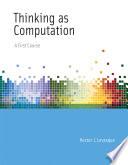
Thinking as Computation

A First Course

Students explore the idea that thinking is a form of computation by learning to write simple computer programs for tasks that require thought. This book guides students through an exploration of the idea that thinking might be understood as a form of computation. Students make the connection between thinking and computing by learning to write computer programs for a variety of tasks that require thought, including solving puzzles, understanding natural language, recognizing objects in visual scenes, planning courses of action, and playing strategic games. The material is presented with minimal technicalities and is accessible to undergraduate students with no specialized knowledge or technical background beyond high school mathematics. Students use Prolog (without having to learn algorithms: “Prolog without tears!”), learning to express what they need as a Prolog program and letting Prolog search for answers. After an introduction to the basic concepts, Thinking as Computation offers three chapters on Prolog, covering back-chaining, programs and queries, and how to write the sorts of Prolog programs used in the book. The book follows this with case studies of tasks that appear to require thought, then looks beyond Prolog to consider learning, explaining, and propositional reasoning. Most of the chapters conclude with short bibliographic notes and exercises. The book is based on a popular course at the University of Toronto and can be used in a variety of classroom contexts, by students ranging from first-year liberal arts undergraduates to more technically advanced computer science students.

This book guides students through an exploration of the idea that thinking might be understood as a form of computation.